

Why your knee hurts on the stairs, not on the flat
Stairs ask your kneecap to carry up to four times your body weight. Here is what that means, and what to do about it.

Elin Nyström
, 1 min read, in running
Most people with sore knees tell us the same thing: walking on the flat is fine, but stairs, hills and getting up from a low sofa hurt. That pattern is a clue, and a reassuring one.
What stairs ask of the knee
When you walk on the flat, the kneecap glides with very little pressure behind it. On stairs, and especially going down, the thigh muscle works hard to control the bend. The pressure behind the kneecap rises to three or four times your body weight.
If the tendon below the kneecap or the cartilage behind it is irritated, that is the moment you feel it.
Why rest rarely fixes it
Resting calms the pain, but it also lets the thigh muscle weaken. The next time you take the stairs, the knee has less support than before. This is why the pain so often comes back.
What helps instead
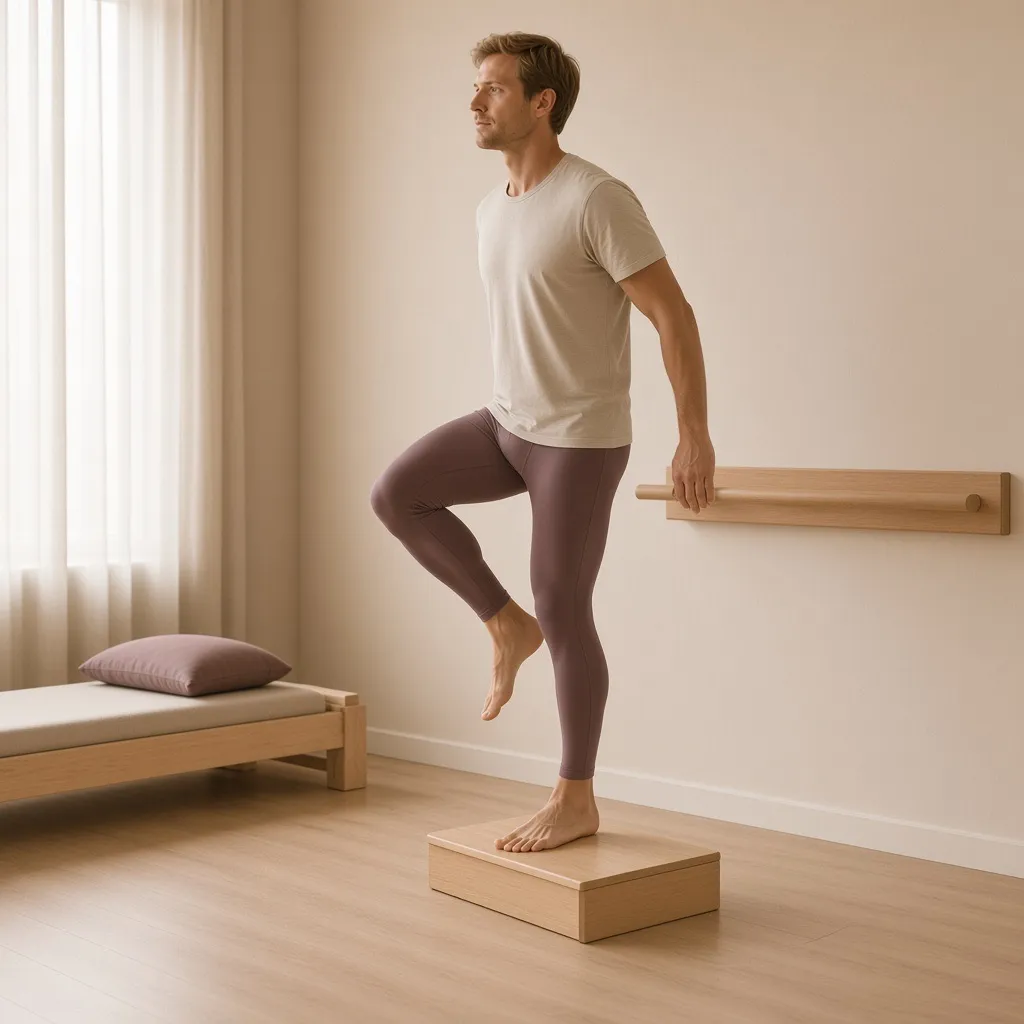
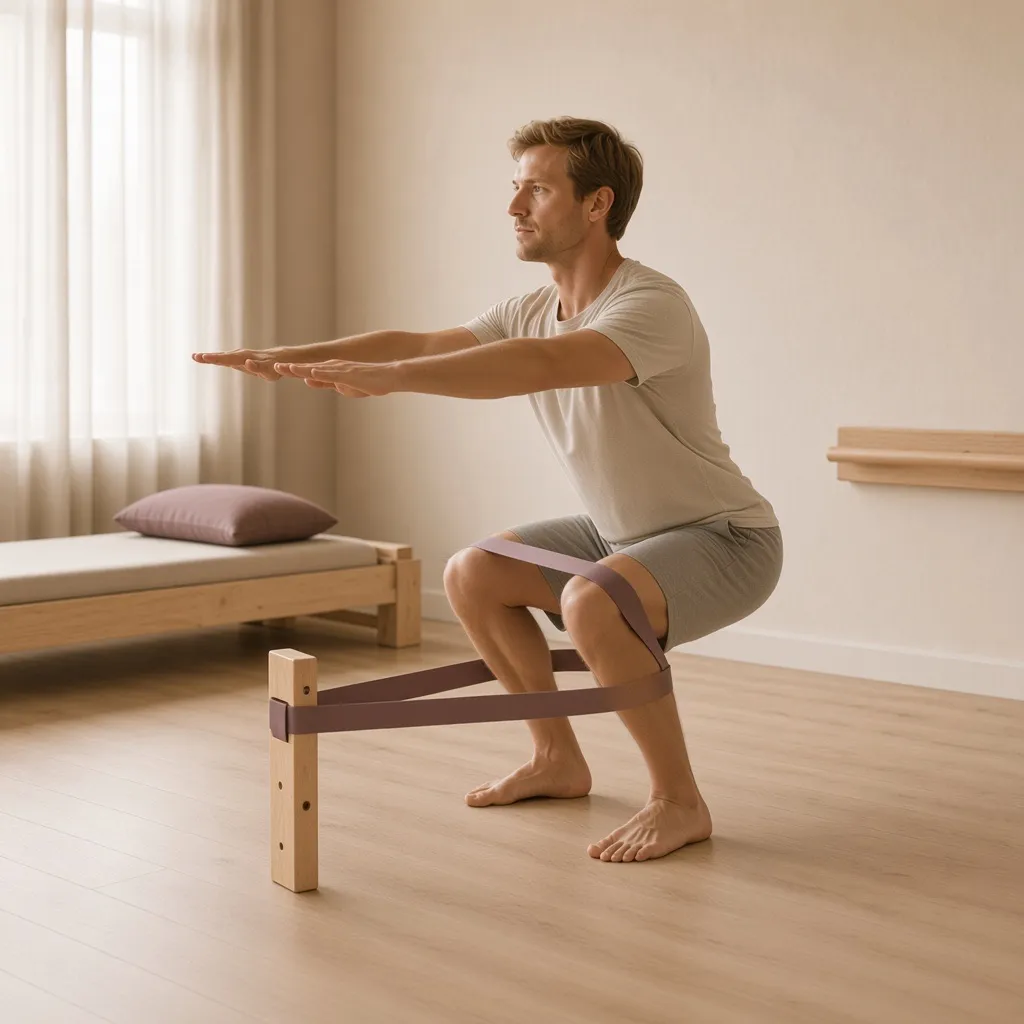
Load that the knee can tolerate, increased slowly. We often start with a held squat, like the Spanish squat, because it builds strength without the knee drifting forward. Most people feel a difference within three weeks.
- Keep pain during exercise at 3 out of 10 or below
- Check how the knee feels the next morning, not just during
- Take stairs one at a time while it settles, and lead with the good leg going up
If the knee swells, locks or gives way, book an assessment rather than waiting.